The end of the Fort
Back to all places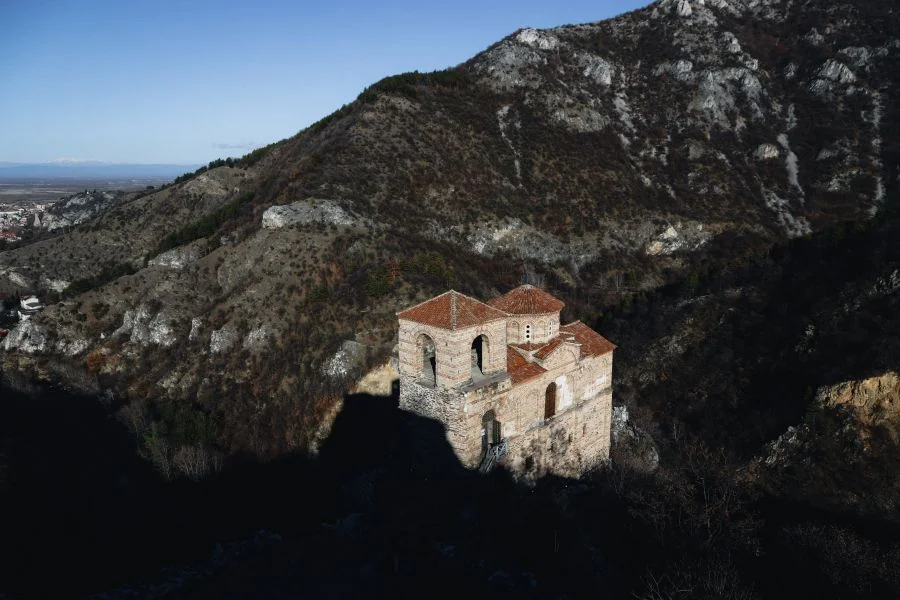
As we move forward into the 14th century, a new shadow fell over the Balkans: the Ottoman Turks. In the 1360s, the Ottoman commander Lala Shahin Pasha conquered Plovdiv. The Ottoman advance was relentless, and this fortress was transformed from a Bulgarian stronghold into an Ottoman outpost.
However, the fortress’s final military act was not a battle between Christians and Muslims, but a civil war between Ottoman princes. In the early 1400s, following the death of Sultan Bayezid I, his sons fought a bloody war for the throne. This period is known as the Ottoman Interregnum.
In 1410, the fortress was held by the prince Musa Çelebi. He used these heights to defy his brother, Suleiman. Suleiman’s army marched into the valley, laying siege to the rock once again. Musa, unable to hold the position, was forced to surrender or flee.
The aftermath was final. Suleiman, realizing how difficult it was to capture this ’Eagle’s Nest,’ decided it was too dangerous to leave it standing. He gave the order to raze it to the foundations. The high walls were dismantled, the castle was torn down, and the cisterns were breached. By 1410, the military life of the fortress was extinguished, leaving behind only the silent stones you walk among today and the magnificent church. It is still standing for one simple reason. The muslims recognize the churches as places of worship of God. They usually converted churches into mosques, and they probably would have done the same here if the fortress had a future. But in this case, it didn’t, so they just let it be governed by the forces of time.
41.98654, 24.87326