The Etnographic museum
Back to all places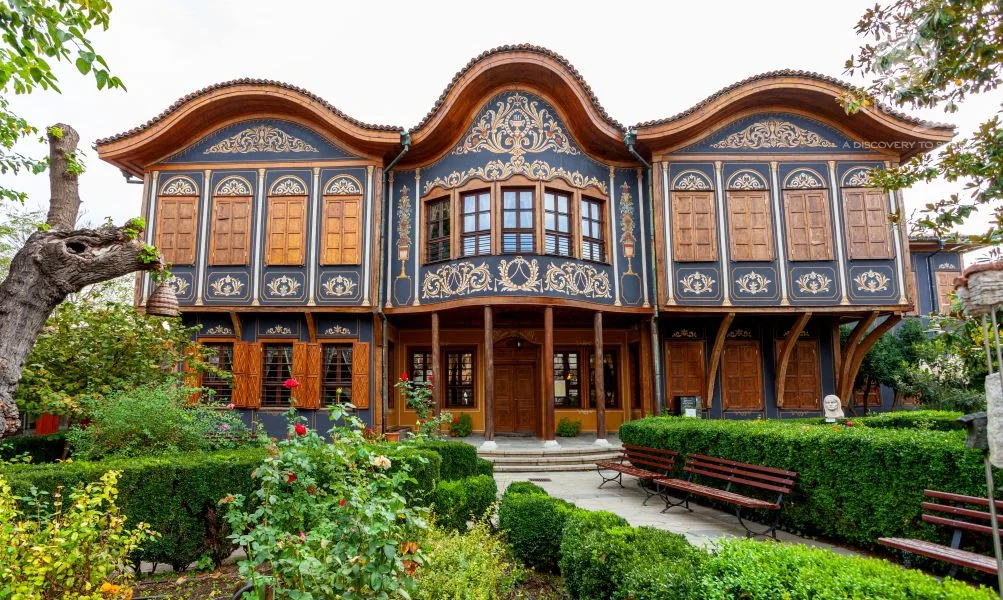
Standing proudly at the foot of Nebet Tepe is one of the city’s most majestic Revival-era buildings — the home of the Regional Ethnographic Museum.
Originally built in 1847, this stunning mansion was the residence of Argir Kuyumdjoglu, a wealthy merchant of Greek descent. His fortune came from trading in wool, hides, and grains, and his home was designed to reflect both status and elegance, following the architectural traditions of the rich urban class in 19th-century Plovdiv. The family name in Turkish means "son of the goldsmith." Probably his starting capital came from the skilful hands of his father.
The house itself is a masterpiece of Plovdiv’s symmetrical Baroque, with a high stone base, richly decorated wooden ceilings, a large central salon (hayet), and intricate floral motifs painted across the façade. A spacious garden, lush with trees and fountains, opens up from the back — a peaceful oasis nestled into the city’s ancient stone walls.
After changing hands several times and even being used as a girls’ school, the house was restored and opened as the Ethnographic Museum in 1952. Today, it is one of Bulgaria’s finest cultural institutions.
Inside, the exhibition spans six halls across two floors, showcasing the traditional lifestyle, crafts, and culture of the Bulgarian people from the 17th to the early 20th century.
42.15005, 24.75302