The first Gymnasium
Back to all places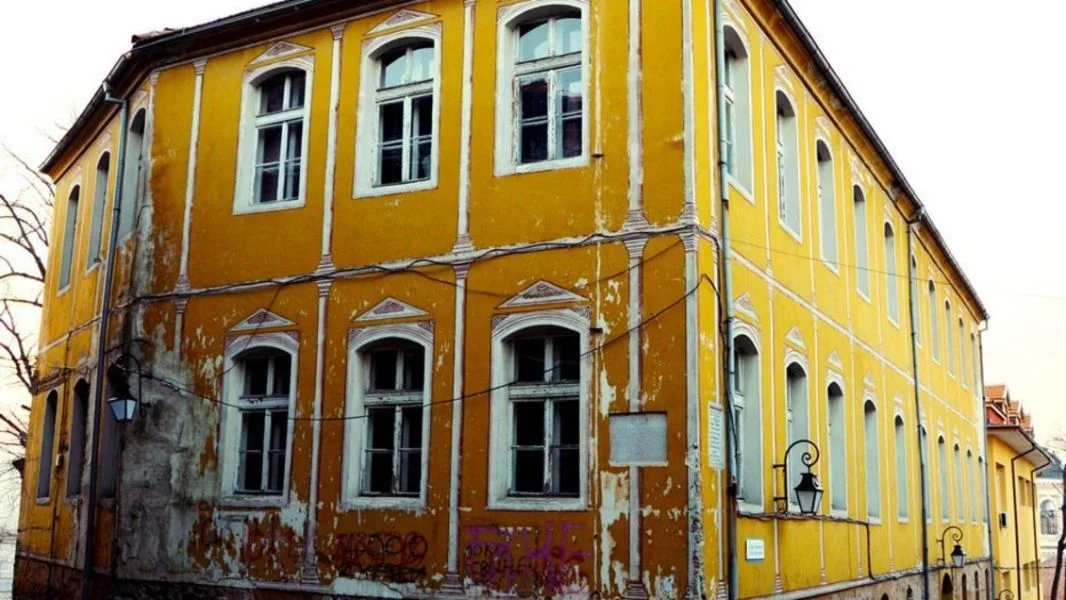
You are now standing in front of one of the most historically important buildings in Plovdiv — known today as the Yellow School. The story of this building begins in 1868, during Ottoman rule. With the permission of Sultan Abdülaziz, and thanks to the efforts of local Bulgarian educators and community leaders, construction was approved. The project was entrusted to Master Dole, a skilled builder from the village of Bratsigovo, part of a famed school of craftsmen.
On the northeast corner of the building, an original stone inscription in Bulgarian and Ottoman Turkish still testifies to the school’s founding. This act can give you a basic idea of the complicated relations between the subjgated Bulgarians and the state of the Ottoman Empire. When it opened in October 1868, the school welcomed 143 students. Just over a decade later, that number had grown to more than 600. At a time when Bulgarian-language education was still a bold act of identity, this gymnasium became a bastion of national consciousness.
Its early years were shaped by some of Bulgaria’s most influential educators and thinkers. Among them were Petko Karavelov, later prime minister, and the great writer and publicist Petko Slaveykov. And among its students? Names that would echo through Bulgarian history — including poet Ivan Vazov, revolutionary Todor Kableshkov, and Petar Bonev, leader of the April Uprising in Perushtitsa.
In 1927, the school building was officially declared a national cultural monument — a recognition of its foundational role in Bulgarian education and the birth of a literate, civic-minded society.
Unfortunately, today it is not in its best shape, but a new project has been launched recently for the restoration of this remarkably important building. I hope that it will remind people that the only true freedom comes with knowledge.
42.14755, 24.75174