The House of Hindliyan
Back to all places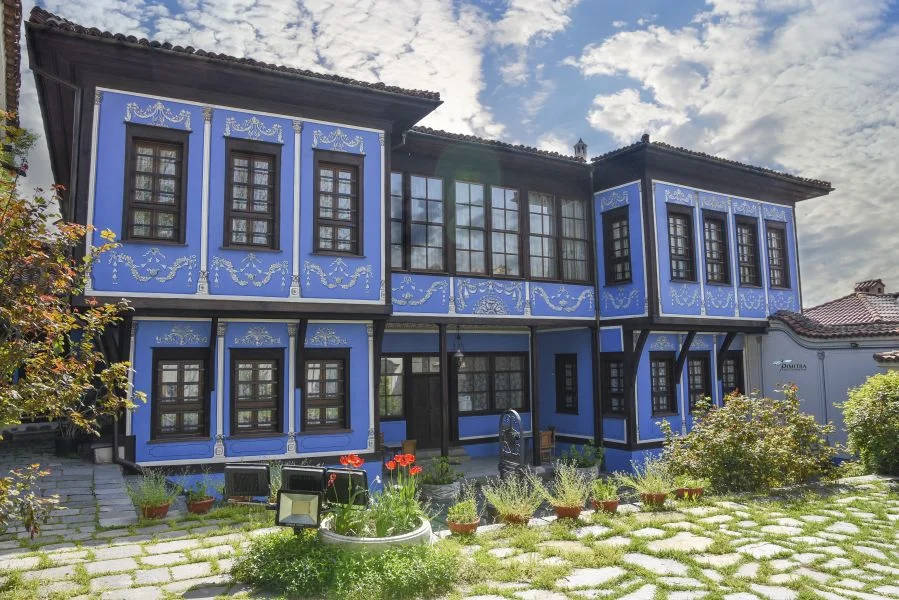
You are now standing in the yard of the House of Stepan Hindliyan, a wealthy Armenian merchant whose nickname came from trading as far as India. Built by master craftsmen in 1834–1835, and the second floor was completed in 1840. A local tradition says it was prepared as a dowry for his daughter, which explains why the house reads as both a family residence and a showpiece. The house was not the only property that the family possessed in those days. Hidlyan’s family was very wealthy and well-connected. Stepan was a real traveler who had established trade connections through the Ottoman Empire, Russia, the Far East, and the Western European trade centers.
During the First World War, the Hindliyan family sheltered Armenian refugees in the property that managed to escape the horrific genocide committed by the Ottomans during their retreat from the Caucas front. Later, in the socialist period, the house was nationalized, and restoration began. In 1969, it was opened as a museum.
In recent decades, the municipality and the Ancient Plovdiv institute took over stewardship and launched new conservation phases from 2013 onward, including work on facades, joinery, and a dedicated project to restore the historic bath.
I highly recommend that you explore this historical treasure from the inside.
On the ground floor, a rare private bath suite survives — a Revival-period hammam built on the principles of the Roman hypocaust that later evolved into the Ottoman steam bath. It’s one of the house’s signatures. Nearby stood the service wing with kitchen, laundry, and servants’ rooms, planned as a separate block off the main residence. On this floor, you will also see the welcoming business room of Mister Stepan. Some of the artefacts on the desk, including the lamp, are original belongings of the family. The bedrooms are just made as an example. The furniture is from the period, but not from the house. The usage of those rooms is unclear, as some knowledge of it has been lost. During the 19th century, usually, the first floors of the houses were the main living places of the family. The upper floors were used during the summers as there were no heating systems, and they were more like a banquet areas.
Climb the steep inner stair to the upper hall known as Hayet. Here, a small wall fountain once circulated rose water. The feature has been restored, and many visitors catch a faint scent of roses in summer. Around the hayet open richly painted parlors and 4 rooms. Each room is dedicated to different cities that Stepan has travelled to and worked in. An interesting fact is that the Armenians in the Ottoman Empire were writing in Armenian but with Ottoman, or Arabic letters, and if it weren’t for an old family from the city of Shumen that kept this tradition, and helped the researchers to uncover the scripts on the walls, we would have never been sure about what was actually depicted. So, if you start from the room on your left and continue clockwise, you will see first the room dedicated to Venice and Alexandria. You will easily recognize on the top two friezes the famous Venetian bridges and canals. In the central niche, you will see the famous Alexandrian lighthouse.
The next room presents Constantinople, depicting the most recognizable scenery-"The Golden Horn". Don’t miss the amazing ceiling here.
The next room was the business room, in which you can see some incredible furniture, produced in Plovdiv in the early 20th century. Pay attention to the desk and the phone in the right corner of the room. The paintings here present 3 different cities. The left one is Lisbon, the central one is Athens, and the right one is Stockholm.
The 4th room was a relaxing tea room dedicated to the Empirial city of Saint Petersburg.
Before you leave this floor, please don’t miss the incredible carpets, most of them were produced in Bulgaria at the beginning of the 20th century. The fabrics were the main trade goods of the family, but as you see in the black cardboard the excellent Chinese pottery, it was not the only one.
So, by exploring this singular mansion, I hope you will, at least to some extent, understand the atmosphere and environment in Plovdiv during the late Ottoman era and the early days of the Third Bulgarian Kingdom. It was a city with prosperity, ambitions, diversity, and a place where the East and West fused.
42.14997, 24.75136