The Late Roman Bishop Basilica of Philippopolis
Back to all places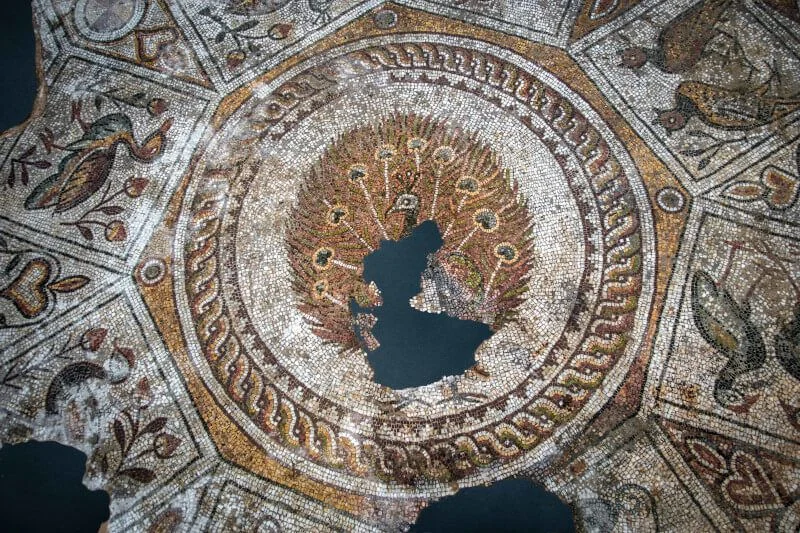
This place is a must; the Bishop’s Basilica of Philippopolis is Bulgaria’s best exposed and most thoroughly researched archaeological site, with a modern museum that lets you walk above two full floors of Late Antique mosaics.
The story begins before Christianity. On this spot, there once stood a Roman public complex very likely linked to the imperial cult. Archaeologists even found a long inscription naming office holders in a Dionysiac association, including sabostophoroi, bearers of the emperor’s image, which strongly suggests an official imperial temple or cult venue here. In the mid-fourth century, after imperial policy favored Christianity, that earlier complex was replaced by a grand three-aisled basilica with atrium, narthex, and marble presbyterium, a change that perfectly captures Philippopolis’ shift into the Christian Roman world. It had the task to say that the World has changed, and there is a new God, who will be the only true God, standing above all mortals.
From the fourth to the sixth century, the basilica was the city’s cathedral and ceremonial heart; its location was no accident, a monumental avenue from the East Gate funneled processions toward this precinct, tying the new faith to the city’s main entrance. The floors were refurbished more than once. Scholars date major mosaic campaigns to the later fifth century when Constantinopolitan liturgy influenced the imagery, before the complex was abandoned by late sixth-century upheavals. Later, the ground became a Christian necropolis, and a smaller church rose above the ruins, testimony to enduring sacred memory.
What you will see inside today is spectacular. The museum covers the full 86 by 38 meter footprint with two exhibition levels, so you can view both mosaic layers, nearly two thousand square meters in total, in situ. Walk the glass bridges and look for peacocks, chalices, and flowing vases, symbols of paradise and the fons vitae. Count the bird species in the great carpet of medallions, more than a hundred varieties according to specialists, and do not miss the tabula ansata panels and framed “hanging” motifs near the aisles, details that reward slow looking. Clear labels explain how columns, capitals, and even pagan inscriptions from the earlier complex were reused in the Christian building, a physical record of continuity and change. Do not spare time in this place, and enjoy the virtual reality tools and the digital reconstructions of this remarkable building.
Before you leave, step outside and try to imagine the approach in antiquity, the broad colonnaded street from the East Gate, the baptisms and councils held here, and the city reoriented around a Christian center that still dazzles today.
42.14406, 24.75222